Screaming From The Earth
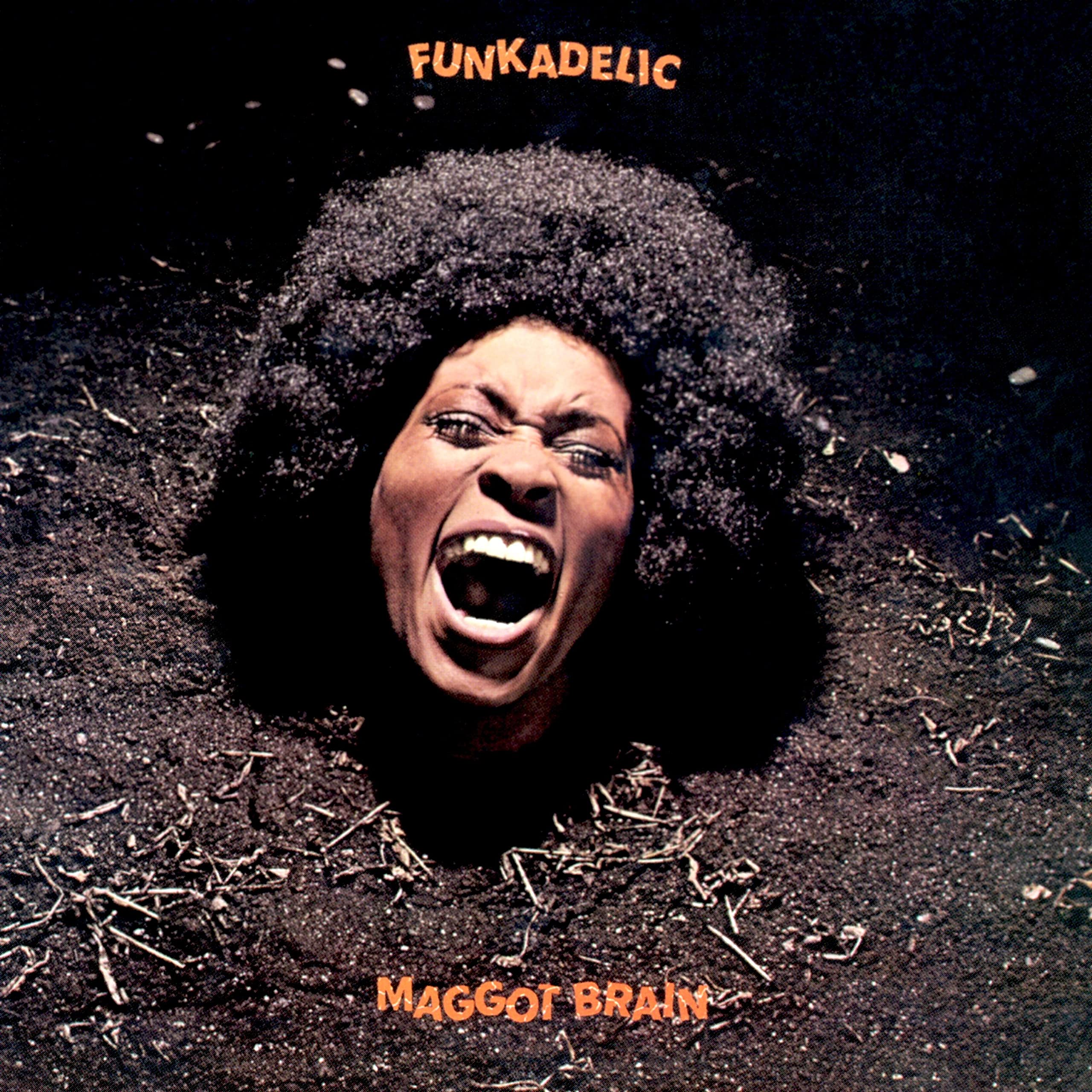
Maggot Brain by Funkadelic - The cover disturbed me. The music surprised me.


I came across Maggot Brain later in life. It wasn't part of my teenage years the way Kick was, or something I'd grown up seeing on the walls of my uncles (I have many uncles)or family friends. I stumbled across it the way you stumble across a lot of things; the internet.
My first reaction to the cover was not what you might expect. I didn't think it was iconic. I didn't think it was art. I thought it was the work of an unknown band trying to manufacture controversy in order to shift a few extra copies. A screaming woman's head emerging from the earth. The name Maggot Brain in jagged lettering. It looked like a band playing at being shocking. I moved on from it. I wasn't going to allow this album to waste my time. I had better, more interesting albums to look at and listen to.
Turns out, I was wrong. I was an idiot. But, this blog post isn't about an amazing album that you should totally listen to, this is about that cover.
Album Anatomy
| Album | Maggot Brain |
| Artist | Funkadelic |
| Released | 12 July 1971 |
| Label | Westbound Records |
| On the cover | A screaming woman's head; model Barbara Cheeseborough emerging from (or buried in) the earth, with only a skull remaining on the back cover |
| Design | Photography by Joel Brodsky |
| Decade | 1970s |
| Buy It | Amazon |
The World In 1971
To understand the cover of Maggot Brain you first need to understand the world it was born into. In the three years before the album was released in July 1971, Martin Luther King Jr had been assassinated, Robert F. Kennedy had been assassinated, the Vietnam War waged on, The Beatles had broken up, and Charles Manson had orchestrated his atrocity in the Hollywood hills. 1971 must have been awful to live through.
America was on fire. And Funkadelic, a psychedelic funk band from Detroit led by the extraordinary George Clinton, were paying attention.
Maggot Brain was Funkadelic's third studio album, recorded at United Sound Systems in Detroit during late 1970 and early 1971. It arrived at a moment when Black America was exhausted, angry, and reaching for something that felt honest about the state of the world. Clinton gave them that.
The Name
Before we get to the cover, we need to talk about the name. Because the name is where this story gets dark.
There are those who say that Maggot Brain was Eddie Hazel's nickname, and that the album was named after him. But countering stories stake a darker claim that the title actually references George Clinton discovering his brother's decomposing dead body in a New Jersey apartment. His skull had cracked open, and the maggot-like folds of the brain were exposed.
Clinton has never fully confirmed or denied either story. Both may be true. Neither makes the name any easier to sit with.
The album opens with a spoken word monologue by Clinton which refers to "the maggots in the mind of the universe." It is not a comfortable listen. It was never meant to be.
The Cover
The cover artwork depicts a screaming black woman's head coming out of the earth. It was photographed by Joel Brodsky and features model Barbara Cheeseborough.
Her eyes are closed. A cry seems to escape her mouth. Maggots are nowhere to be seen, but can be guessed to be everywhere: in her afro, in the soil surrounding her. On the back cover, only a bony skull remains of her countenance.
It is one of the most striking images ever put on an album cover. And like all great cover art, it raises more questions than it answers. Is she severed or buried beneath the neck? Is she laughing or screaming? The ambiguity is part of the beauty.
Photographer Joel Brodsky had a difficult brief. He was handed the title Maggot Brain and asked to create an image that matched it. What he produced, a woman simultaneously emerging from and being consumed by the earth manages to be terrifying and beautiful at the same time.
The Process Church
Here is where the story takes an unexpected turn. The album's liner notes are a polemic on fear provided by the Process Church of the Final Judgement.
The Process Church was a secretive religious organisation founded in London in the 1960s, with a theology that drew on both Christ and Satan as complementary forces. By 1971 they had developed a reputation that was partly deserved, partly manufactured. It was a sinister cult with alleged connections to Charles Manson.
According to author Rickey Vincent, the organisation's alleged association with the Manson Family, along with the album's foreboding themes and striking artwork, lent Funkadelic the image of a death-worshipping black rock band.
Clinton was aware of exactly what he was doing. Darkness was the point. The liner notes read: "Fear is at the root of man's destruction of himself. Without fear there is no blame. Without blame there is no conflict. Without conflict there is no destruction. But there IS fear - deep within the core of every human being it lurks like a monster, dark and intangible."
Heavy stuff. For a funk album.
Eddie Hazel and the Guitar Solo That Changed Everything
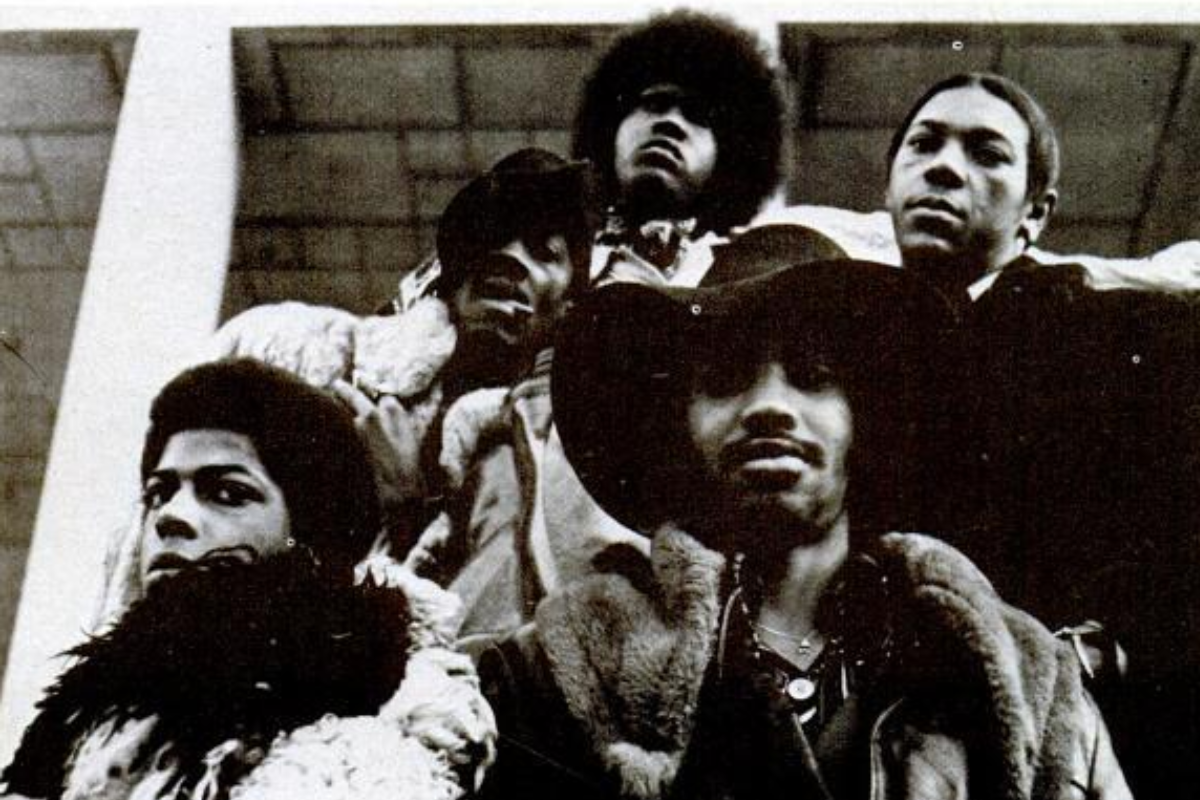
No piece about Maggot Brain is complete without talking about Eddie Hazel. Because the title track, ten minutes of largely improvised guitar, is one of the most extraordinary pieces of music ever recorded.
George Clinton, reportedly under the influence of LSD during the recording session, told Hazel to play as if he had been told his mother was dead; to picture that day, what he would feel, how he would make sense of his life, how he would take a measure of everything inside him.
The track was recorded in one take. Though several other musicians performed on it, Clinton largely faded them out of the final mix so that the focus would be entirely on Hazel's impressive guitar skills.
Rolling Stone ranked the song 60th on their list of the 100 Greatest Guitar Songs. Music critic Greg Tate described it as Funkadelic's A Love Supreme, a reference to John Coltrane's masterpiece of spiritual jazz. High praise for an album called Maggot Brain, don't you think?
The Cool, Smooth Surprise
Here is the thing that nobody tells you about Maggot Brain before you listen to it for the first time. You look at that cover, the screaming woman, the dark earth, the name in jagged letters and you brace yourself for something aggressive and uncomfortable. Something that is going to hurt your ears.
And then you press play. And it's cool. And smooth. And in places, genuinely beautiful.
That contrast, between the darkness of the cover and the warmth of the music, is exactly what great album art is supposed to do. It prepares you for a different version of the experience than the one you actually have. It makes the music surprising. It makes you lean in.
George Clinton understood this perfectly. The cover tells you one story. The music tells you another. The truth is somewhere between the two.
What The Cover Actually Means
Some argue that the woman on the cover represents Mother Earth herself. That Maggot Brain is about embracing Blackness and Black people, about rising above all the fears and the difficulties of living in a white supremacist America.
Others see it more simply; a visual representation of the album's opening monologue. The maggots in the mind of the universe. Birth and death occupying the same image simultaneously.
Both readings are valid. Both are probably correct.
What I know is this; the first time I saw that cover I dismissed it as the work of a band trying too hard. And I was completely wrong. The cover of Maggot Brain is one of the most considered, most layered, and most honest pieces of album art ever made. It doesn't dress anything up. It doesn't make the world look better than it is.
In 1971, at the height of Vietnam, Manson, and the slow collapse of the American dream, it was a revolutionary act.
It still makes me smile and disturbs me at the same time. I think that was always the point.


